
How to Keep Bees, Wasps, and Ants Out of Your Hummingbird Feeders

There's nothing more frustrating than watching your hummingbird feeder get taken over by bees, wasps, or ants. Not only can this discourage hummingbirds from feeding, but it can also lead to harmful interactions—and even injuries—between birds and aggressive insects.
But why are these insects so obsessed with hummingbird feeders? And how can you keep them away without harming them or the birds? We have the answers.

Why Insects Love Hummingbird Feeders
Just like hummingbirds, insects like bees, wasps, and ants are drawn to sugar. The sweet nectar inside feeders is irresistible to them—especially in warm weather. Yellow, in particular, attracts wasps and bees, and any exposed nectar—whether from leaky feeders or feeders with open ports—can quickly invite an insect invasion.
Insects are especially attracted to:
Spilled or leaking nectar
Feeders with yellow parts (they associate yellow with flowers)
Sticky residue on or around the feeder
Feeders placed too close to insect nesting areas
Why You Should Prevent Insect Access
While these insects are important pollinators, they can pose serious risks to hummingbirds:
Aggression: Wasps can be territorial and may chase hummingbirds away
Stings: In rare cases, wasps may sting hummingbirds
Contamination: Ants crawling into feeders can introduce bacteria
Nectar depletion: Insects can drain feeders quickly, leaving nothing for the birds
Plus, a feeder swarming with insects is likely to go unused by the very hummingbirds you’re hoping to help.
How to Keep Bees, Wasps and Ants Away from Hummingbird Feeders
Here are science-backed, hummingbird-safe solutions:
1. Use Ant Moats
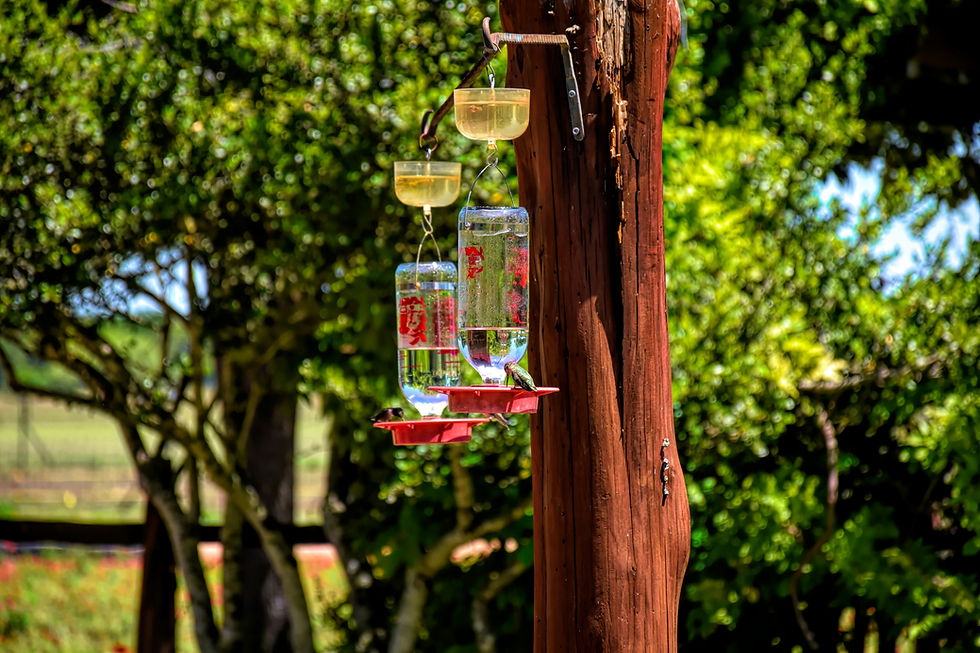
Ant moats are small water-filled barriers placed above the feeder. Ants can't cross the water to reach the nectar.
Many feeders, including models from our sponsors Perky-Pet and Kingsyard, include built-in ant moats.
2. Choose Bee-Resistant Feeders
Bees and wasps are drawn to the color yellow more than red. Opting for all-red feeders can help deter them.
Look for feeders that:
Have bee guards (small plastic mesh over the feeding ports) or long, flower shaped ports or port attachments that are too narrow for bees
Don’t leak (no dripping nectar)
Have red instead of yellow feeding ports

3. Keep Feeders Clean and Dry
Wipe up any spilled nectar immediately
Clean feeders every few days with hot water
Don’t let nectar drip from the ports
Sticky surfaces attract ants, wasps, and bees. Dry, clean feeders are far less appealing to insects.

Anna's Hummingbird ©Alice Madar
4. Relocate Problem Feeders
If bees or wasps are swarming:
Move the feeder a few feet away—sometimes this disrupts their foraging path
Try placing decoy feeders with extra sweet sugar water away from your hummingbird zone (to attract insects elsewhere). Put the sugary mix in a shallow dish so the bees don't drown—they are important pollinators, too!
This won’t eliminate the problem entirely, but it can reduce pressure on your main feeder.
5. Skip Toxic Solutions
Never use insecticides, petroleum jelly, cooking oil, or sticky traps around feeders. These can harm or kill hummingbirds and other wildlife. Instead, stick to mechanical and behavioral barriers.
Sharing your yard with hummingbirds means a little extra attention to cleanliness, color choice, and feeder design—but the payoff is worth it. By keeping bees, wasps, and ants away from your feeder, you're creating a safer, more inviting space for your feathered visitors.
Explore feeders with built-in insect deterrents from trusted brands like Kingsyard and Perky-Pet, and enjoy watching hummingbirds thrive in your backyard.


It’s really a great and helpful piece of information.
I’m satisfied that you shared this useful information with us.
Please keep us up to date like this. Thanks for sharing stylos.
AI Agent technology is really transforming how businesses automate complex workflows and scale operations efficiently. Thanks for sharing these practical insights!
이 글에서 제안한 개미 모이는 정말 유용하네요! 특히 여름철에 벌과 개미가 급증하는 시기에, 깨끗하고 안전한 환경을 유지하는 것이 얼마나 중요한지 새삼 느끼게 됩니다. 개인적으로는 자주 방문하는 새들 덕분에 호미가드도 자주 청소하게 되는데, 이 방법을 통해 벌과 개미를 멀리할 수 있다면 정말 좋겠어요. 이와 관련된 더 많은 팁을 찾을 수 있는 곳이 Apostate Verity에 있어요.
Uygulama indirmeden önce özellikleri ve güvenilirlik konusunda bilgi edinmek benim için önemli. happy mod download konusunda verdiğiniz bilgiler bu açıdan oldukça yararlı. Özellikle yeni kullanıcıların dikkat etmesi gereken noktaları belirtmeniz içeriğe değer katmış.
A randomizer can make simple decisions more interesting while keeping the process straightforward. It can be used to select numbers, names, activities, or other options. I appreciate the benefit of removing unnecessary hesitation because a random result can provide a quick starting point when several choices seem equally reasonable.